

The Fascination with Post-Processing in Fine Art Photography and What Is the Most Important Processing Tool


Is fine art photography something we build through technique, or something we reveal through vision?
Do better tools lead to stronger images, or do they only give us more refined ways to repeat what has already been done?
And at what point did the act of learning photography become so tightly related to working in post-processing that we began to confuse visual formulas with artistic depth?
In short: Is Post-processing Enough to Create Fine Art Photography?
Photography still occupies an unclear position between craft and art, and this condition defines how we learn and practice it. Faced with the pressure to produce compelling images, many turn to post-processing, searching for creative answers in technical tools. The fascination is understandable; post-processing gives us control and predictability, yet this reliance often masks a deeper uncertainty about what we want to express, why we photograph at all, and whether photography can be approached with the same artistic responsibility as other visual arts.
In this article, I explore this tension between vision and post-processing. Not to dismiss technique or post-processing, but to question their place. To ask what happens when tools become substitutes for vision, and how fine art photography, especially black and white fine art photography, changes when we bring our focus back to intention, perception, and artistic vision.
INTRODUCTION
I am writing this article because this is a topic I’m very interested in after decades of working with art, as an architect and a photographer, and after teaching fine art photography for pretty much just as long, also because recently this topic came back to my attention when one of my students, who is otherwise very talented, asked me if they can become a fine art photographer in after doing a 3-day workshop with me. I’ve been meaning to talk about this for a long time, but the coincidence with my student asking this question made me decide to do it now. I’m sure it will be an interesting topic for everyone to reflect upon. And this is because the first thing I hear from my students when they want to work with me is about how they can learn post-processing to become good fine art photographers.
Another reason I want to talk about this subject is because, also recently, came to my attention a certain video tutorial commercialized by somebody who attended a workshop with me and who presented my Photography Drawing processing technique in this video, unfortunately, without consulting me or receiving my permission for doing so (not the first time it happens, by the way), and maintaining that this is how you create black and white fine art photography. I won’t mention names because it is not important for this article, and this situation can’t be settled here, so I won’t touch the ethical side of this now, but what someone who does that doesn’t understand is that fine art photography is about much more than reproducing in your photographs a certain technique or look that someone else has created.
And if you want to know more about the theory that lies at the foundation of Photography Drawing, you can read more in this article about it. This way, you might also understand who I am talking about above. Also, you can get more practical advice on how to apply this technique in the tutorial Black and White Fine Art Processing with the Method of Photography Drawing. This is an excellent method for creating B&W photography, but it can be used in color photography, too, to create three-dimensionality and depth, as I demonstrated many times in my workshops and video tutorials.
So, let’s dive into researching whether post-processing equals fine art photography or if maybe learning processing only is not enough, but it is just a tool among many other tools we need to create true art in our photography work.
Make yourself comfortable, grab a cup of tea or coffee, and let’s explore why there is this fascination with post-processing in fine art photography.
“You don’t take a photograph, you make it.”
– Ansel Adams –

WHY ARTISTIC VISION IS MORE IMPORTANT THAN THE TOOLS WE USE TO CREATE IT?
Photography has always lived in an uncertain space between disciplines. Born from science, optics, and chemistry, it joined quite late the company of the other arts, carrying with it a suspicion that never went away: that it is more a technical process than a creative one, and is more about reproduction than about interpretation. Despite more than a century of photographic history in museums, galleries, and collections, photography still sometimes feels as though it needs to justify its place among the other arts. This persistent uncertainty shapes not only how photography is perceived from the outside, but also how photographers themselves approach the medium.
One of the most evident consequences of this tension can be seen in the way photographers, especially those at the beginning of their journey, relate to post-processing and the confusion they feel about how they should create art with a camera. Should photography be approached primarily through artistic thinking, or through technical mastery? Should photographers rely on intuition, emotion, and personal vision, or on tools, techniques, and software to guide them toward a result?
In my experience teaching photography for more years than I can count, this confusion almost always shows up in the same place: in post-processing.
The result of this ambiguity is that, again and again, post-processing is treated not as a tool, but as an answer. As if the right software, preset, or technique might finally unlock the door to “fine art photography.” This gives birth to a widespread belief that fine art photography is primarily about achieving a certain look, atmosphere, or visual effect rather than about articulating an artistic vision.
Many students come to me convinced that post-processing holds the key to fine art photography. They believe that if one learns the right techniques, masters the right software, or develops a recognizable “look,” their images will automatically become art. Fine art photography, in this view, is not so much about expressing something personal as it is about producing a certain atmosphere, often dark, moody, contrasty, or abstract and minimal, something that visually resembles what one may associate with fine art photography.
THE FASCINATION WITH POST-PROCESSING
This fascination with post-processing is understandable. It is also deeply revealing, as it uncovers something more profound: a hesitation to fully engage with photography as an art form.
At first glance, post-processing appears to offer control. Unlike the unpredictability of shooting conditions like light, weather, location, or artistic approach, like vision or emotional state, software seems stable and repeatable. Sliders respond predictably and obediently. Effects can be done and undone. Presets and filters can give you a decent-looking image in seconds. Aesthetic decisions can be tested without consequence. For many, this controlled environment becomes a kind of safe haven, a space where uncertainty is reduced and where artistic anxiety can be silenced.
But this reliance on post-processing also reveals a deeper discomfort: a hesitation to fully accept photography as an art form that demands risk, ambiguity, and personal exposure.
In many mainstream educational courses, photography is introduced primarily as a craft. Students learn how to expose correctly, how to sharpen, how to remove distractions, how to “improve” an image, and how to use processing to correct mistakes. These skills are valuable and necessary, but they are rarely framed within a broader artistic approach. Vision, intention, and meaning often appear as vague, secondary concerns, things that are assumed to emerge later, almost automatically, once technical mastery has been achieved.
This is why many of my students, in the workshops I teach or my mentoring programs, when I ask them to write a vision statement or to describe the intention and goal they have with a photograph, only write or talk about what they did in post-processing, and often even omit to talk about why they did that. This is also why, in the beginning, so many of my students find it challenging to approach photography from a vision-based point of view. And that is also why I am so happy when, after some time working together, I see them start to embrace their vision, become more expressive, and ultimately happier as photographers and artists.
Speaking about workshops, I’m so excited and can’t wait for my next workshop, and I am sure you will be too if you join us. We are going to the Jurassic Coast on the Southern Coast of England, where we will not only shoot amazing landscape photography locations, but also study both vision and post-processing techniques. We will do that in a way that perfectly unites both of them, so you can find your artistic self while learning the tools to transform your personal expression into powerful images. If you want to join us on this landscape photography trip to the fascinating Jurassic Coast, you can find many more details and sign up at the link. And of course, you can join us at other workshops too. I always have the most wonderful people coming to my workshops, so you will not only create great photography, but also make great friends.
Back to our main topic, another approach reminiscent of traditional photography is the belief that the way you prove that you are a good photographer is by knowing your camera well and, by extension, your processing tools. This opinion is, in my view, as far from the truth as it would be the belief that painting is about knowing how to place your canvas on the easel or what shape and dimensions of brushes you should use, or what brand of colors you should paint with.
What happens when you view photography like this, is that technique becomes a substitute for vision.
When students focus primarily on post-processing, they are often not trying to express something specific; they are trying to arrive somewhere. They are looking for visual certainty: an image that resembles what they already recognize as “fine art photography.” This is why so many images begin to look alike. The same tonal structures, the same atmospheric effects, the same emotional triggers repeated over and over. The photograph becomes an imitation of an idea of art, rather than an articulation of an inner quest and or authentic emotion.
“The photographer projects himself into everything he sees, identifies himself with everything in order to know it and feel it better.”
– Minor White –
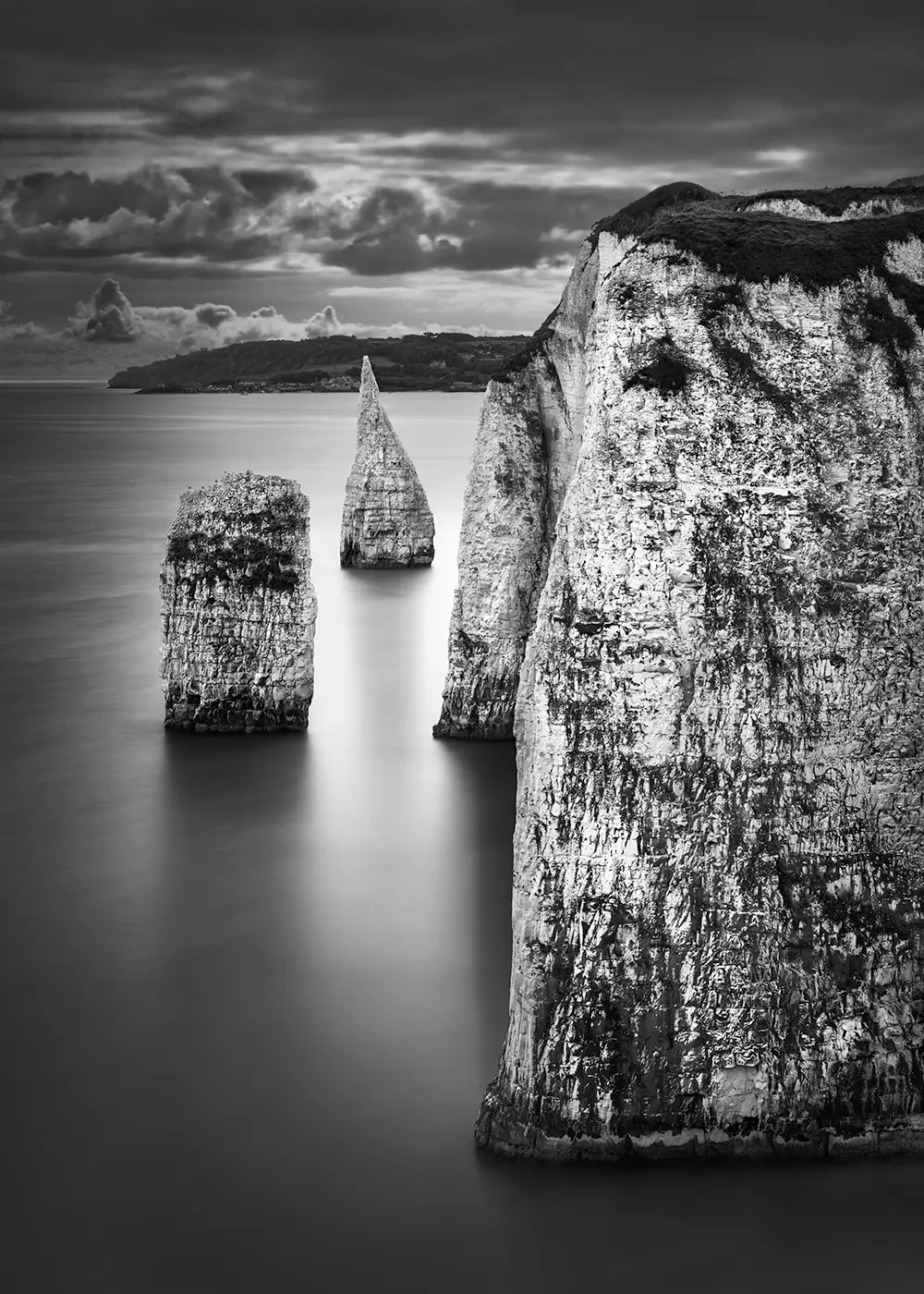
Nowhere is this more visible than in black and white photography.
Black and white photography has long been associated with seriousness, depth of meaning, and artistic qualities. For many photographers, converting an image to black and white feels like an automatic step toward art. And yet, black and white is often treated as a post-processing decision rather than a way of seeing. The photograph is made first, and only later “converted” into black and white, as if the absence of color alone could provide meaning. You hear so often from photographers who say, “The colors weren’t that good, so I converted the image to black and white.” As if black and white photography is a quick recipe for fixing failed color photographs.
But black and white photography is not simply color removed. Nor is it only about black and white tones or about contrast, which is what you frequently hear when black and white photography is taught. It is a different visual language altogether. It demands a heightened awareness of light, structure, rhythm, and emotional weight. When black and white is used as a stylistic effect rather than a conscious choice, it risks becoming another layer of decoration, another way of hiding the absence of a clear artistic intention. And when more and more photographers emulate the same style of black and white photography, it becomes what mannerism is in art – a mere shell void of content.
YOU ARE AN ARTIST – DON’T DOUBT IT
Although regrettable, this approach is, however, understandable. This is where the unresolved identity crisis of photography comes up and silently does its damage.
Unlike painters or writers, photographers are rarely encouraged to think of themselves as artists from the very beginning. Painters are not expected to justify whether painting is an art. Writers are not asked whether words are art or merely communication. Photographers, however, often feel compelled to prove that what they do goes beyond technical craft or mechanical reproduction. Post-processing becomes one of the easiest ways to provide that proof.
The more visible the manipulation, the more the image appears to distance itself from the accusation of being “just a photograph”. Heavy post-processing, dramatic contrasts, and visible manipulation become ways of making the image more “serious”. The image proclaims: “This is art,” instead of allowing meaning to emerge more personally and in a more refined way.
This strategy may work on the surface, but it comes at a high cost for the photographer.
By focusing so heavily on post-processing, you risk not making the most essential questions one can make in art: Why am I drawn to this subject? What am I trying to say? What do I want the viewer to feel, question, or remember? These questions are uncomfortable because they do not have immediate answers. They cannot be solved with tutorials, plugins, Photoshop actions, panels or presets. They require introspection, patience, a willingness to accept uncertainty, emotional vulnerability, and the skills to use these uncomfortable states as a source of inspiration for creating art. Art is not easy. If it were easy, it would be boring. But this complex process of deacantation of your vision is what produces masterpieces, just like in art.
From a psychological point of view, this avoidance makes sense. Approaching photography as an art means accepting vulnerability. It means acknowledging that not every image will work, that personal ideas may feel unclear or unimportant, and that originality cannot be guaranteed. Technique, by contrast, offers reassurance. If the image fails, it can be blamed on a lack of skill rather than insufficient clarity of vision.
CHOOSE YOUR MENTORS WISELY
I believe that here are also to blame many of those teaching photography by focusing solely or mainly on post-processing either because they don’t really know how to create fine art photography and what it takes to create art, or because post-processing sells, being more easily aaccessible than finding something original to say, and that gives them better exposure than talking about the more difficult path of creating true art. That wouldn’t be a problem if it was done individually, but when this is done by somebody who is an educator and is seen as a role model, the damage can be much greater than it would have been if it was only a personal choice of the educator in their own work.
This is why many photographers fall into the trap of repeating the same visual solutions again and again. Because this is what they learn. Once a particular post-processing approach “works,” it becomes a template. Over time, the photographer learns how to reliably produce images that are correctly presented, aesthetically pleasing, and socially validated. What often disappears in this process is curiosity, experimentation, the willingness to research, to try different approaches, the acceptance that you will sometimes fail, that your work will not be understood or acclaimed. That is the difficult part of creating art. But without going through this phase, you cannot reach the other side, where you find the artistic satisfaction of creating work that is truly you.
And, don’t get me wrong, I love post-processing, and I teach it too. Intensely and at all levels, from basics to advanced techniques. I wrote books about this, created written and video tutorials, and will continue to do so. But I never stop there. I always put processing in context and always work with my students on finding the story of an image, the vision that gives it life. Because this empowers them to create more than photography. It empowers them to create art.
If you want to learn about how to use both vision and post-processing and do it in a more comprehensive way, by seeing everything explained in detail in practice on one of my most popular images, I can recommend watching the video course From Vision to Final Image – Mastering Black and White Photography Processing. where I go into great detail about both how to concieve your work following your vision and how to make that vision reality in your image through post-procesing.
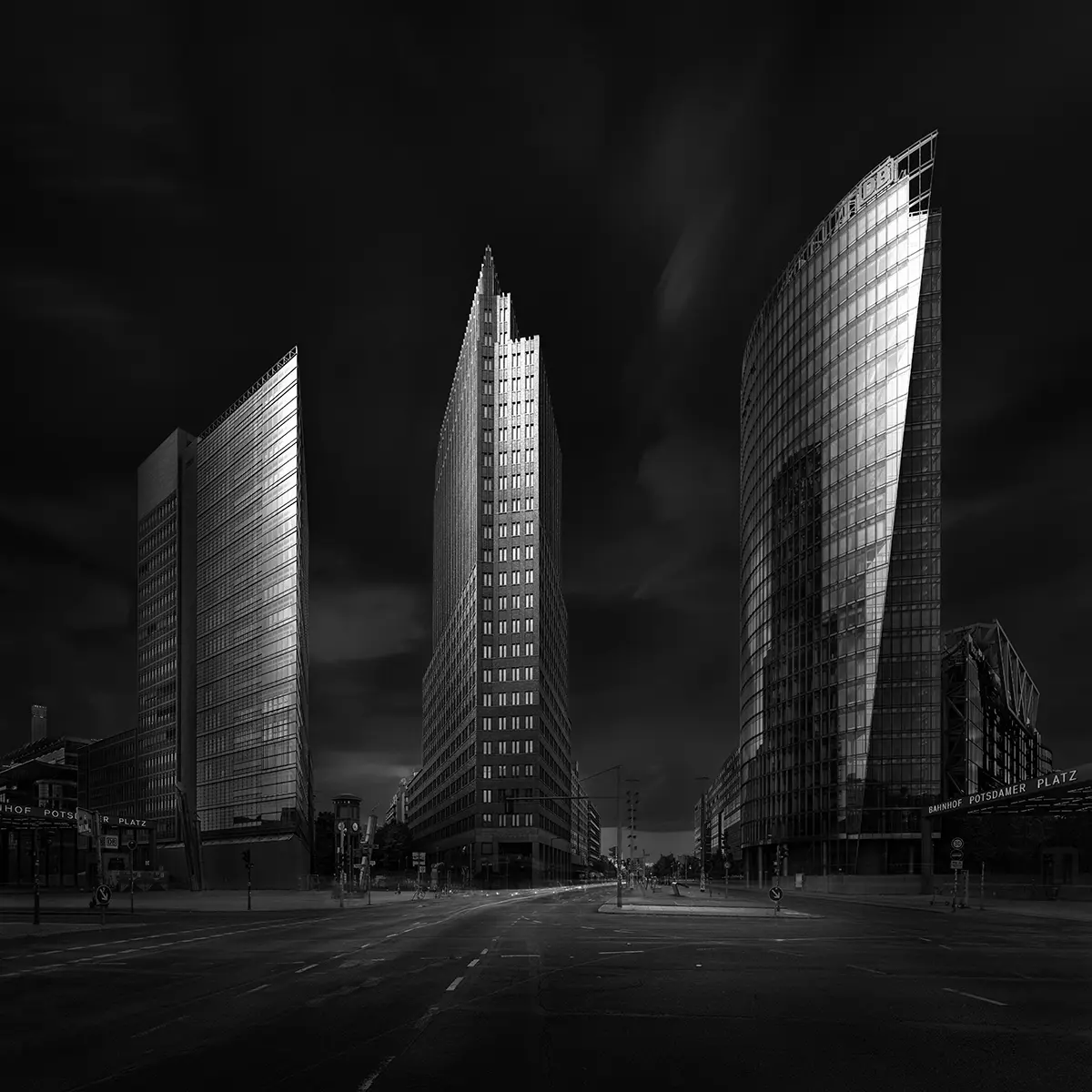
POST-PROCESSING AND THE NEED FOR CONTROL IN PHOTOGRAPHY
Ironically, the more control we seek through technique, the less freedom weoften allow ourselves creatively.
Fine art photography, however, does not emerge from control alone. It emerges from tension: between intention and chance, clarity and ambiguity, knowing and not knowing. Artistic vision is not something that can be added at the end of the process. It precedes the photograph, it shapes the way the photographer sees, and continues to evolve long after the image was captured.
Artistic vision is our companion from the moment we see the first glimpses of the photograph with our mind’s eye, and it remains our companion for life. When we put our vision into the photographs we make, when we infuse them with our soul, they stay with us forever and become part of who we are. They are not means to an end, they ARE the end. They are the journey we embark on in our lives. They are the experiences we have, and they shape our personality and worldview. They are our language and our manifestation in this world. And for these photographs to become that, they need to have more substance than just applying a certain look or technique in post-processing.
This is where a different approach to teaching and understanding photography becomes crucial.
If photography is approached primarily as an art, then technical tools, including post-processing, should go through a process of rethinking. They are no longer the foundation, but they become the tools. Just as a writer learns grammar not to impress with correctness but to articulate their thoughts, photographers must learn technique in the service of expression. Post-processing, in this context, becomes a way of clarifying an idea, not the means you use to compensate for its absence.
DEVELOPING VISION
Developing vision is slower and far less measurable than learning to use your software. It involves looking at art beyond photography, reflecting on personal experiences, and paying attention to recurring emotional or conceptual themes in your work and life. It also involves learning to tolerate uncertainty, to make images without knowing exactly where they belong or how they will be received. It means being brave enough to be vulnerable when expressing your feelings openly in your work and not trying to dissimulate them by making photography work that is technically sound but lacks emotion. It means letting go of the safety of repetition and allowing your photography to evolve, even if that evolution feels bumpy or inconsistent. But despite being more complex than just learning a certain post-processing technique, it is exactly this vulnerability that allows your fine art photography to move beyond style and into substance.
This is perhaps the most radical shift photographers need to make: from asking “How do I make my images look like fine art?” to asking “What do I need to say, and why does photography feel like the right language for it?”
When you begin to work from this place, post-processing naturally changes. It becomes more deliberate and truthful. Your editing decisions are guided not by trends or habits, but by meaning. The image no longer needs to demonstrate effort or sophistication, but it needs to be truthful to your intention and vision.
In black and white photography, especially, this shift is crucial. The choice to work without color should come from an inner necessity, not from habit, trends, or aesthetic convention. Black and white should support the idea, not replace it.
Photography does not become art through software, technique, or superficial beautifying presets. It becomes art when it is used consciously, thoughtfully, and honestly, as a means of exploring ideas, emotions, and discovering ways of seeing that could not exist otherwise.
Post-processing will always be part of photography. The problem is not its presence, but its elevation to a central role it was never meant to play.
Reframing photography as an art first and a craft second does not diminish technical skill; it gives it purpose. It shifts the focus from imitation to inquiry, from control to curiosity, and from safety to expression. And perhaps most importantly, it opens the possibility for photographers to create work that is not merely “catchy”, but genuinely authentic.
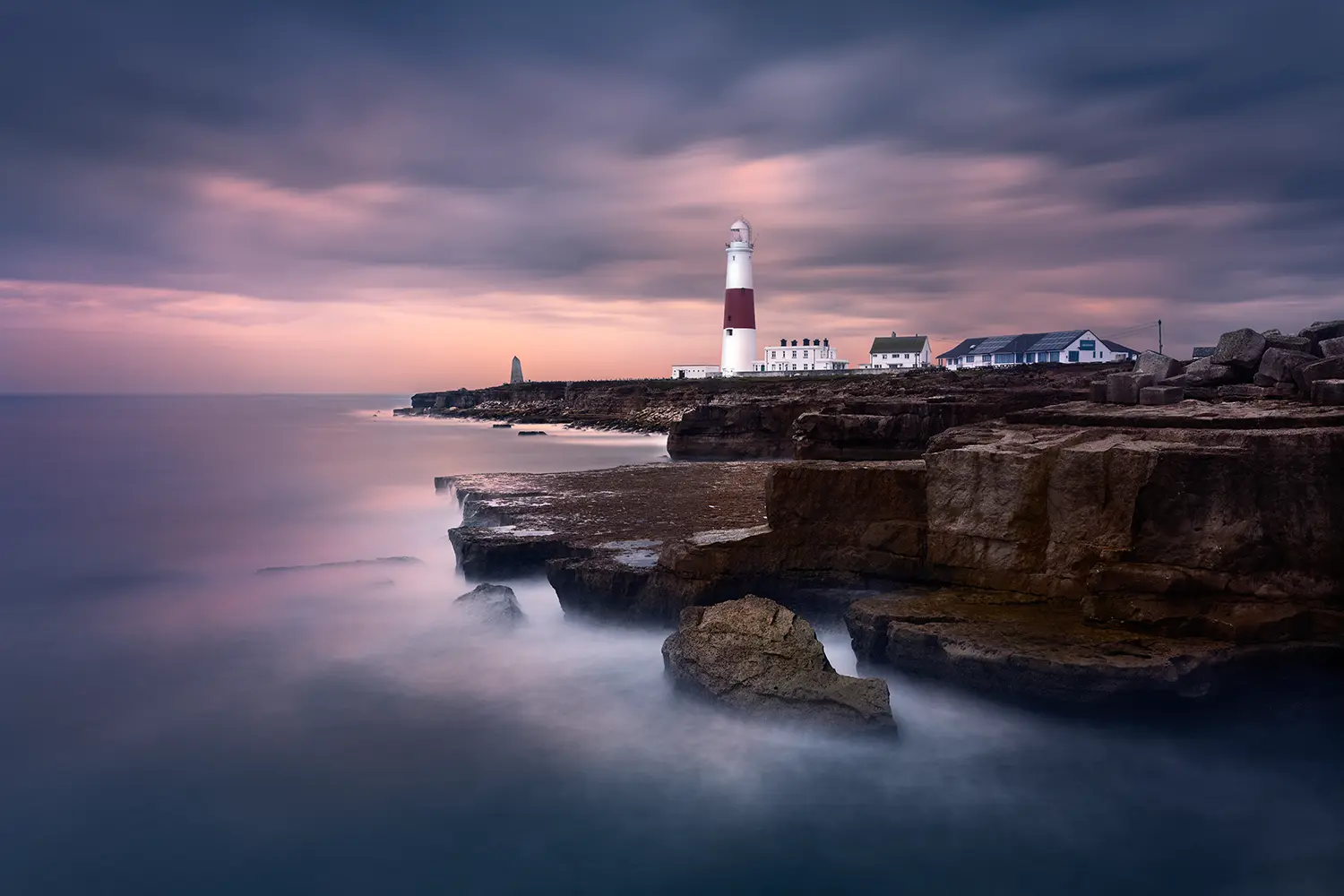
WHAT IS THE MOST IMPORTANT PROCESSING TOOL
As I often like to say, “vision is the most important processing tool”. Because only when you know what you want to say are you able to use technique in a meaningful way.
Just like art, at its core, fine art photography is not born from technique, equipment, or post-processing decisions, but from vision. Vision is the internal necessity that precedes the image; it is the impulse to say something, to express yourself, before even knowing how it will look. It is the force that guides you and allows you to find the subject of your photograph, which you will choose among hundreds of other subjects you have available. It gives direction to every choice that follows, from where to stand to how to compose or when to press the shutter. It takes you by the hand and helps you decide how to shape the image in the darkroom or on the screen. It gives you clarity on how to make the print. Without vision, technique becomes repetition, and tools become a crutch, offering control but not meaning. With vision, even the simplest photograph can carry depth, meaning, and intention. Vision is what transforms photography from the execution of methods into an act of artistic thinking, from craftsmanship to art.
To make my point even clearer, I gathered a few quotes by well-known artists: photographers, painters, sculptors, who all believe that vision is more important than tools. You can read them above and below. To make it easier, I’m also mentioning, where needed, who the authors of the quotes are, so you know who these artists are and can put their thoughts into context. I hope these quotes will give you inspiration, and that, together with my thoughts, they will give you a few ideas to reflect upon and incorporate into your fine art photography.
“The worst enemy to creativity is self-doubt — but the second worst is comfort.”
– Louise Bourgeois – French sculptor and painter –
“Art does not reproduce the visible; rather, it makes visible..”
– Paul Klee – German painter –
“To create is not to manufacture, but to listen.”
– Agnes Martin – Canadian-American painter –
“When an artist is concerned primarily with technique, the result is usually sterile.””
– Robert Motherwell – American painter –
“A work of art is the trace of a magnificent struggle.”
– Robert Henri – American painter –
“If I knew what the picture was going to be like, I wouldn’t make it.”
– Gerhard Richter – German painter –
“The role of the artist is to see what others do not see.”
– Georgia O’Keeffe – American painter –
“The idea becomes a machine that makes the art.”
– Sol LeWitt – American artist –
“Learn the rules like a pro, so you can break them like an artist.”
– Pablo Picasso – I’m sure you know him :). If not, he was a Spanish painter, but he lived most of his life in France, which is why some believe he was French.
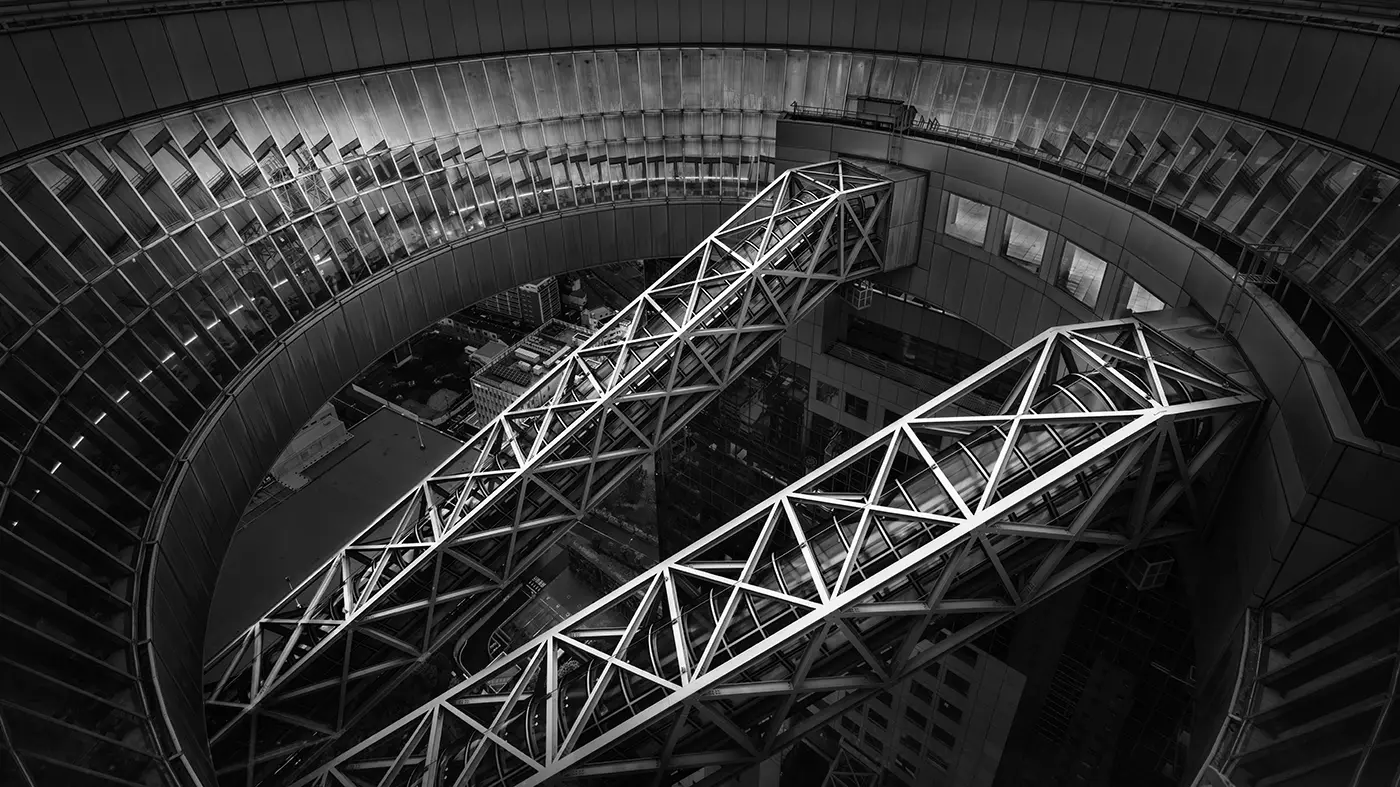
Conclusion
It’s vision and Post-Processing – Not Vision Or Post-Processing
Maybe the most important shift for those who feel trapped in post-processing is not a change of software, but a change of approach. Instead of asking how an image should look, or what preset looks better, it can be far more meaningful to ask why it needs to exist at all. What is the question behind the photograph? What is the story? What feeling, or idea, do you want to translate into visual form? When vision takes precedence, technique naturally follows it. Without that inner guiding voice, post-processing becomes a substitute for intention, a way to avoid artistic decisions rather than deepen them. The courage to work from vision often means accepting uncertainty, ambiguity, and even failure, but it is exactly where artistic growth begins.
This does not mean rejecting post-processing, nor romanticizing the idea of vision. On the contrary, when vision is clear, post-processing becomes a powerful tool rather than a crutch. It turns into a language rather than a convenience; it becomes an extension of your mind and soul, bringing life to your photograph. The balance lies at the point where you learn to move freely between imagining and executing, between the tools of the mind and the tools of the craft. Fine art photography emerges not from choosing between art and craft, but from creating a hierarchy: vision first, tools second. When that order is respected, both can coexist in a way that is not only more honest but far more liberating.
If you want to learn more and go even deeper into the subjects of artistic vision, post-procesing and how you can achieve the perfect blend between the two, you can join me at one of my upcoming workshops or my online and in-person courses where we talk about this and other fine art photography subjects in great detail.
If you want to hear my thoughts on other subjects and take advantage of free tutorials and other special surprises, subscribe to my website and join our community, where we talk about fine art photography, art and everything around these topics.
If you are interested in knowing more about black and white fine art photography, inspiration, (en)Visionography, long exposure photography, architecture fine art photography, and many other subjects, feel free to read my other tutorials and have a look at my books and courses.
FURTHER STUDY RESOURCES
FINE ART BLACK AND WHITE PHOTOGRAPHY, ARCHITECTURAL PHOTOGRAPHY, LONG EXPOSURE PHOTOGRAPHY
Find more resources about fine art black and white photography, (en)Visionography, long exposure photography and architecture photography in Julia Anna Gospodarou’s extensive collection of photography tutorials. To receive free future tutorials, you can subscribe here.
Learn more about how to create fine art photography, architectural photography, long exposure, etc. from conception to advanced processing in Julia’s video courses Understanding Fine Art Architecture Photography – The Complete Course, From Vision to Final Image – Mastering Black and White Photography Processing, in the video tutorial Long Exposure, Architecture, Fine Art Photography – Creating (en)Visionography, and the book From Basics to Fine Art – Black and White Photography, or by attending one of her highly appreciated workshops.
Find Julia’s recommendations for the best software and gear to create fine art photography, and curated deals and discounts for these tools.
To study with Julia Anna Gospodarou personally, find out about our

(en)VISIONOGRAPHY VOTED
FeedSpot TOP WORLD BLACK AND WHITE PHOTOGRAPHY BLOGS
Support our mission for high quality photography education. Donate now!
We believe in knowledge, education, and the freedom of spirit that creates great art. We believe in art and artists.
Please donate to help us continue sharing free high quality photography education and inspiration.
For more than one and a half decades, we have been sharing free content on fine art photography, black and white photography, architecture photography, long exposure photography, as well as our original concepts of “(en)Visionography” and “Photography Drawing”.
Thousands of photographers started their journey in fine art photography here and found inspiration and practical resources that empowered them. Many have won awards for their work and are making a career in photography based on knowledge acquired from our free tutorials, books, courses, and workshops.
This makes us incredibly proud of our work.
To empower even more photographers to reach their dreams, we want to keep this resource free forever so every new or advanced photographer can have access to knowledge, quality photography education, and inspiration.
To help us in our efforts, please consider becoming a patron of this cause with your recurring donations.
You will be part of a generous effort by other exquisite art and photography-loving patrons, and you can be proud of being a supporter of art and artists like the famous Maecenas of the past. Art and artists need your support, as always in the history of art and photography.
Thank you!
Julia Anna Gospodarou – Founder – (en)Visionographer
Founder of (en)Visionography™ and creator of Photography Drawing™, internationally acclaimed fine art photographer, Master architect, educator, and best-selling author, with 25+ years experience in photography and architecture, Julia Anna Gospodarou is a leader in modern fine art photography who shaped with her work the way architecture fine art photography looks today.
Awarded more than 100 times in the most important photography competitions worldwide, two-time International Photography Awards IPA Photographer of the Year, World Photography Awards SWPA, and Hasselblad Masters Finalist, her work was widely exhibited and published internationally.
With a passion for the world’s civilizations and speaking six languages, Julia was always in the avant-garde of thinking as an architect and a photographer, constantly pushing the limits of what is possible, constantly reinventing herself as an artist and an individual. Her huge love for travel and discoveries and her passion for teaching, art, and photography led her to become in the past one and a half decades one of the world’s top-rated fine art photography educators and workshop organizers.